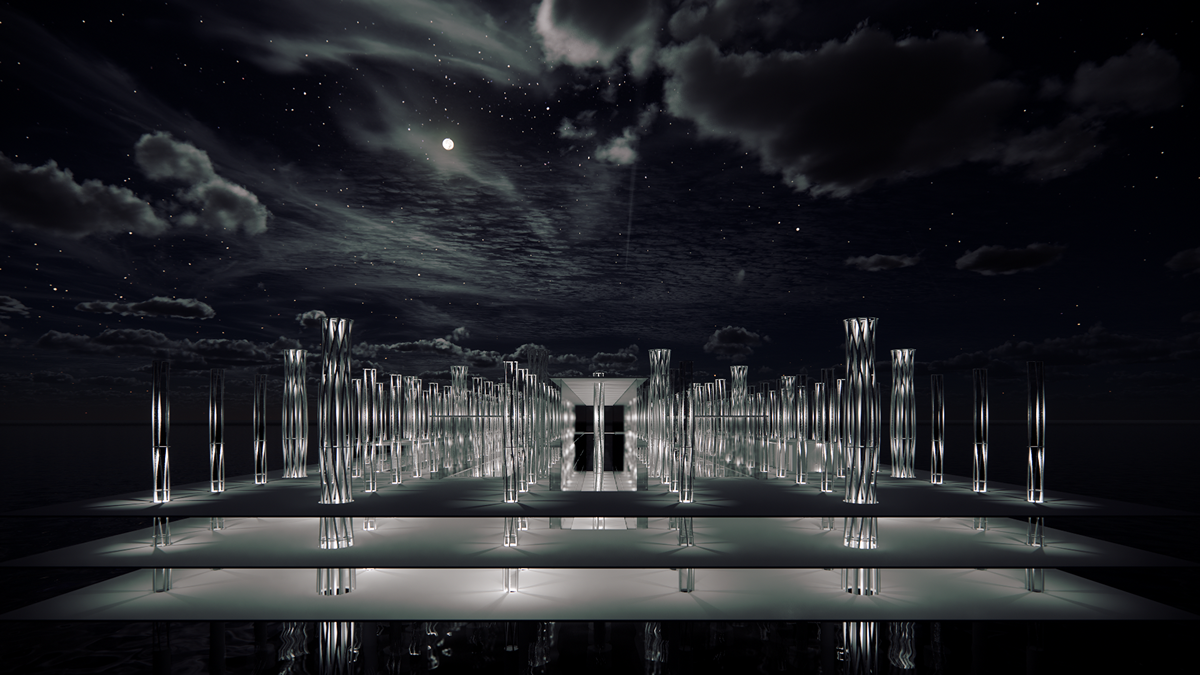
Expedition is a common dream, but logistical, legal, and environmental barriers often make it unattainable. Biome Library 55-1 addresses this by bringing curated biomes into urban spaces, making exploration accessible to all.
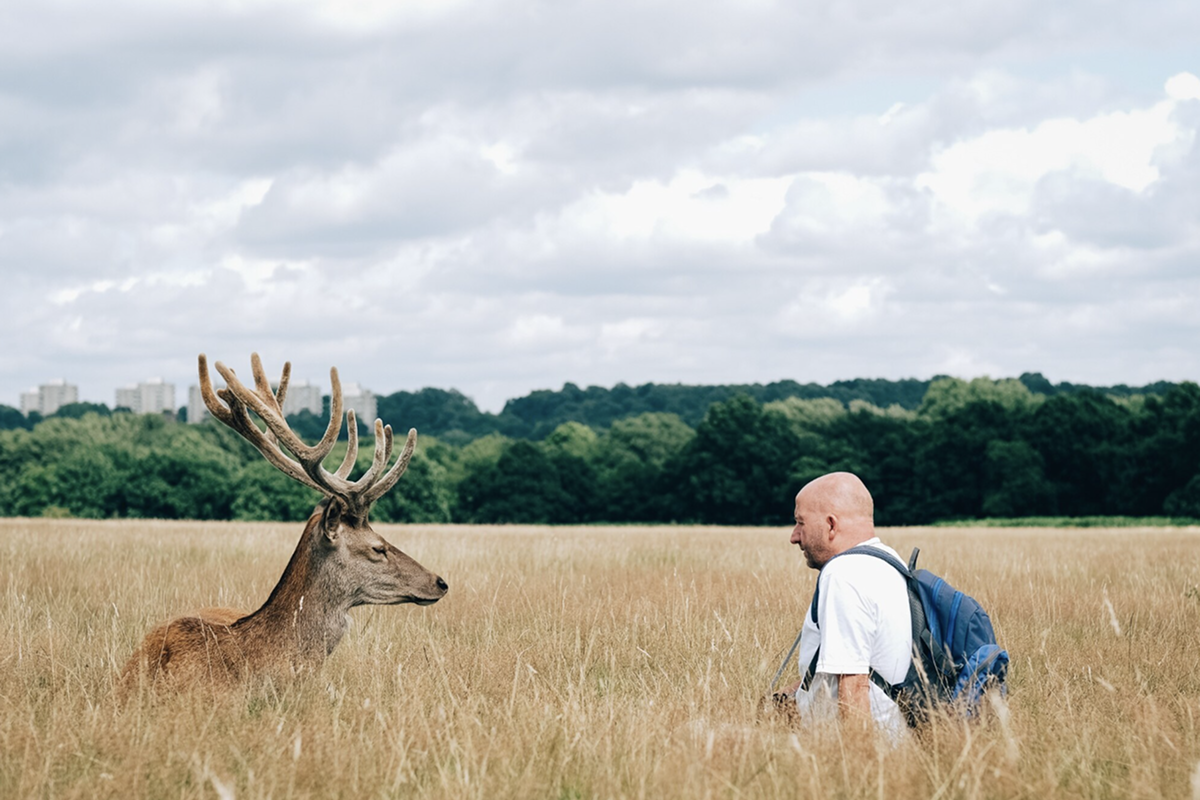
Humans are driven to experience diverse environments and cultures, often through travel. While some pursue urban novelty,
others are drawn to pristine natural landscapes.
However, exploring untouched biomes is inherently difficult. Their unpredictability—ranging from extreme climates to political and visa
restrictions—makes such journeys largely inaccessible to untrained civilians. Immaterial elements can convincingly simulate environments. By
choreographing these within a confined space, it becomes possible to create a living project that is immersive, adaptive, and ever-changing.
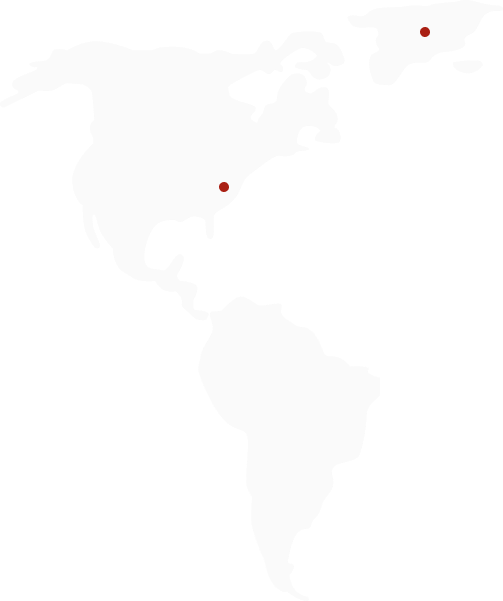
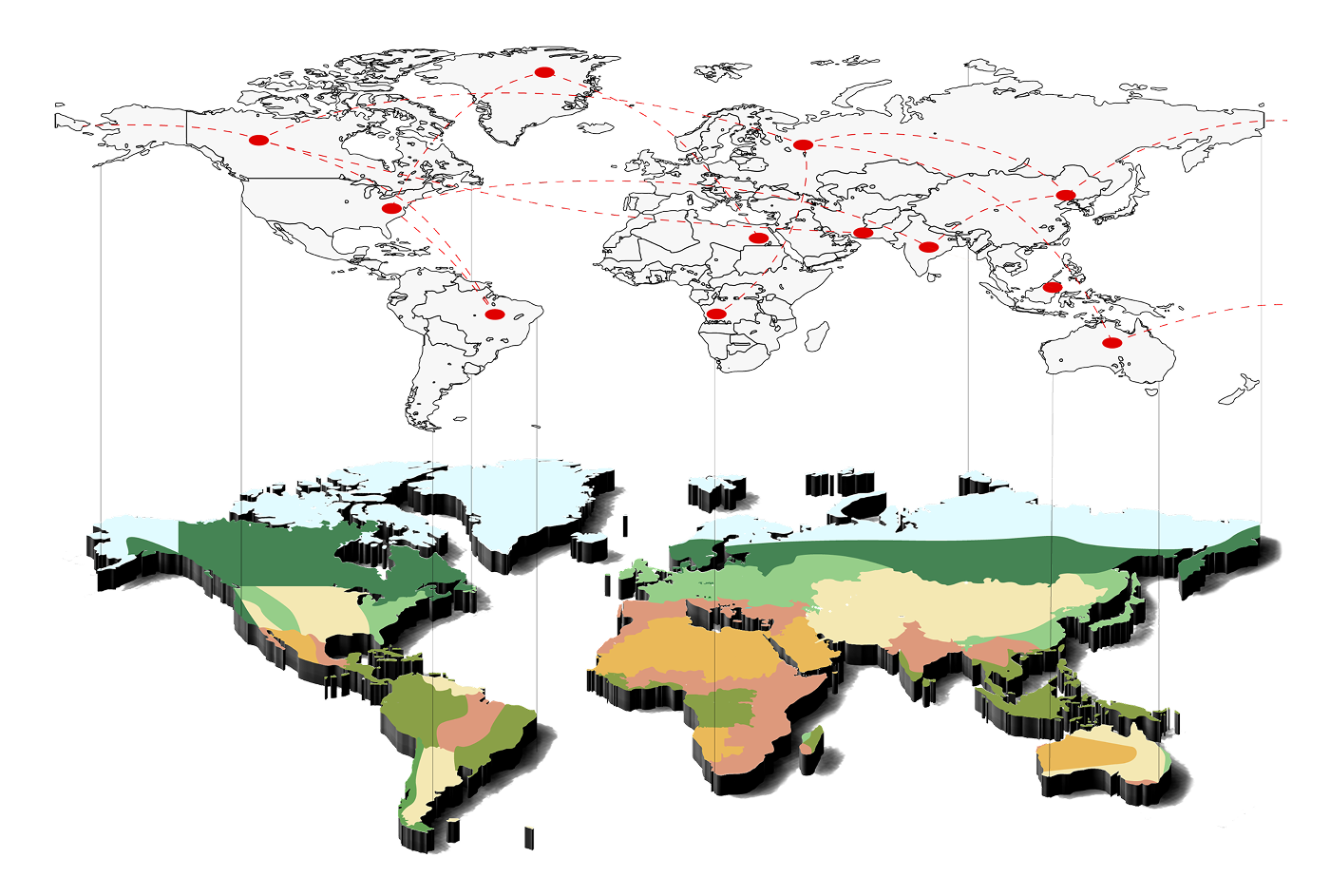
The United States’ strict immigration policies make travel and exploration difficult for many visitors.
Greenland offers aurora views, but its vast wilderness limits survival in emergencies.
African grasslands and deserts attract visitors, but human–wildlife conflict often leads to injury or death.
Russia contains much of the world’s tundra and taiga, but political instability and war severely limit access.
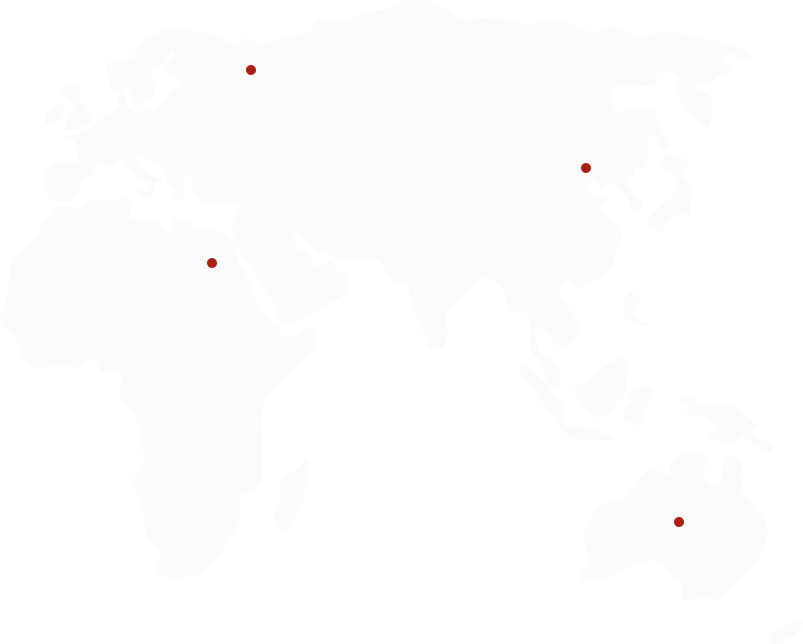
Diplomatic tensions have reduced foreign travel to China and increased tourist surveillance.
Much of Australia is desert, where limited medical access and venomous wildlife threatens tourists.
The United States’ strict immigration policies make travel and exploration difficult for many visitors.
Greenland offers aurora views, but its vast wilderness limits survival in emergencies.
African grasslands and deserts attract visitors, but human–wildlife conflict often leads to injury or death.
Russia contains much of the world’s tundra and taiga, but political instability and war severely limit access.
Diplomatic tensions have reduced foreign travel to China and increased tourist surveillance.
Much of Australia is desert, where limited medical access and venomous wildlife threatens tourists.


1
2

3
4
5
6
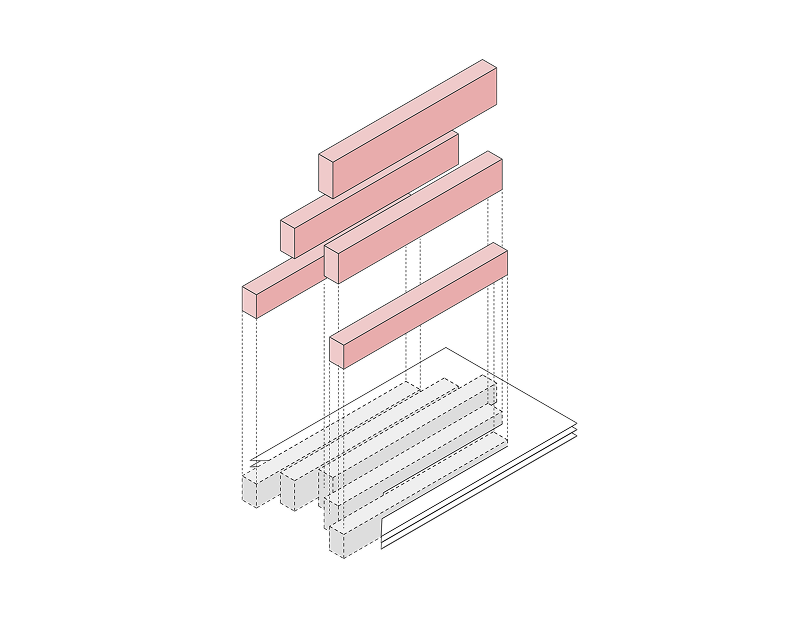
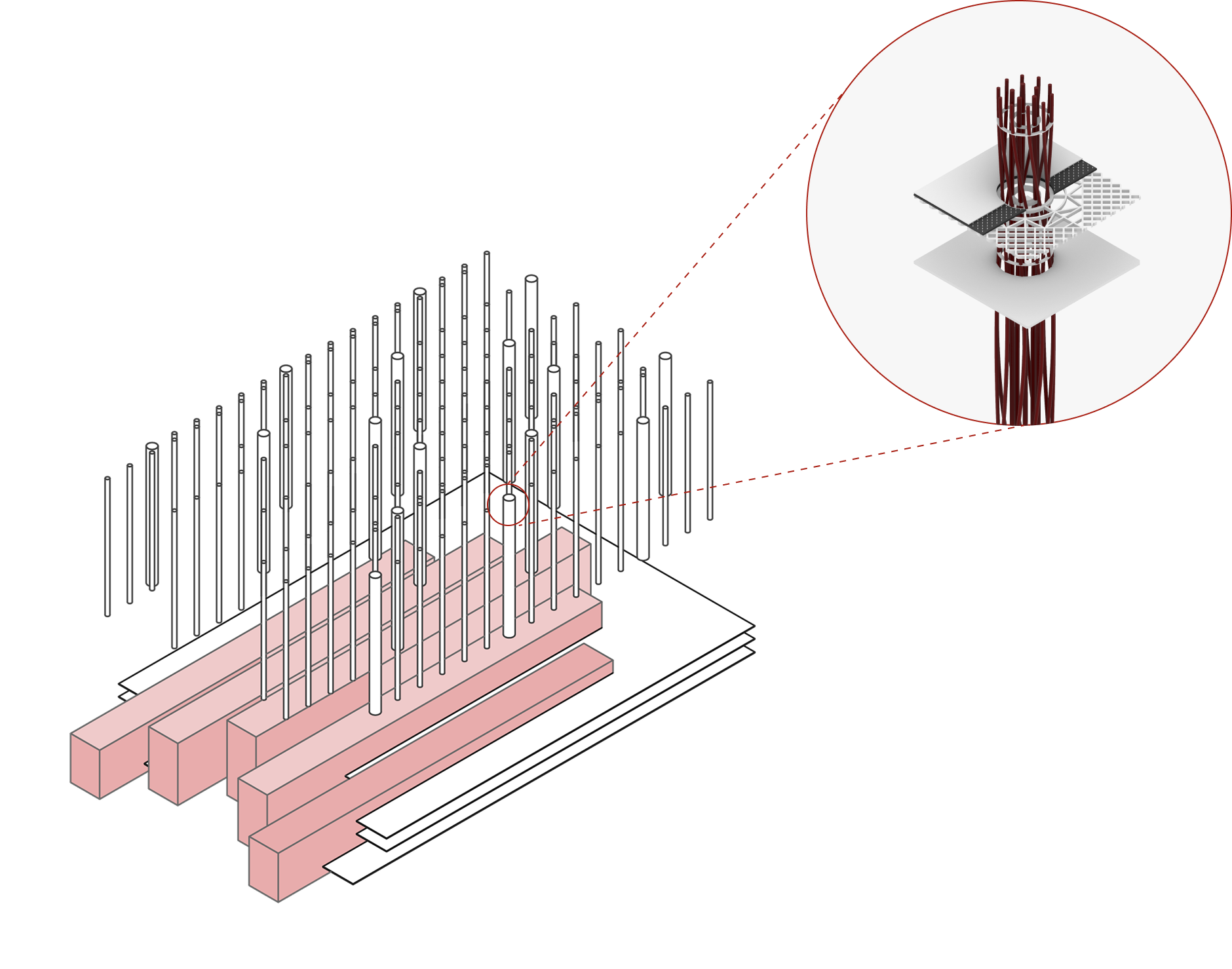
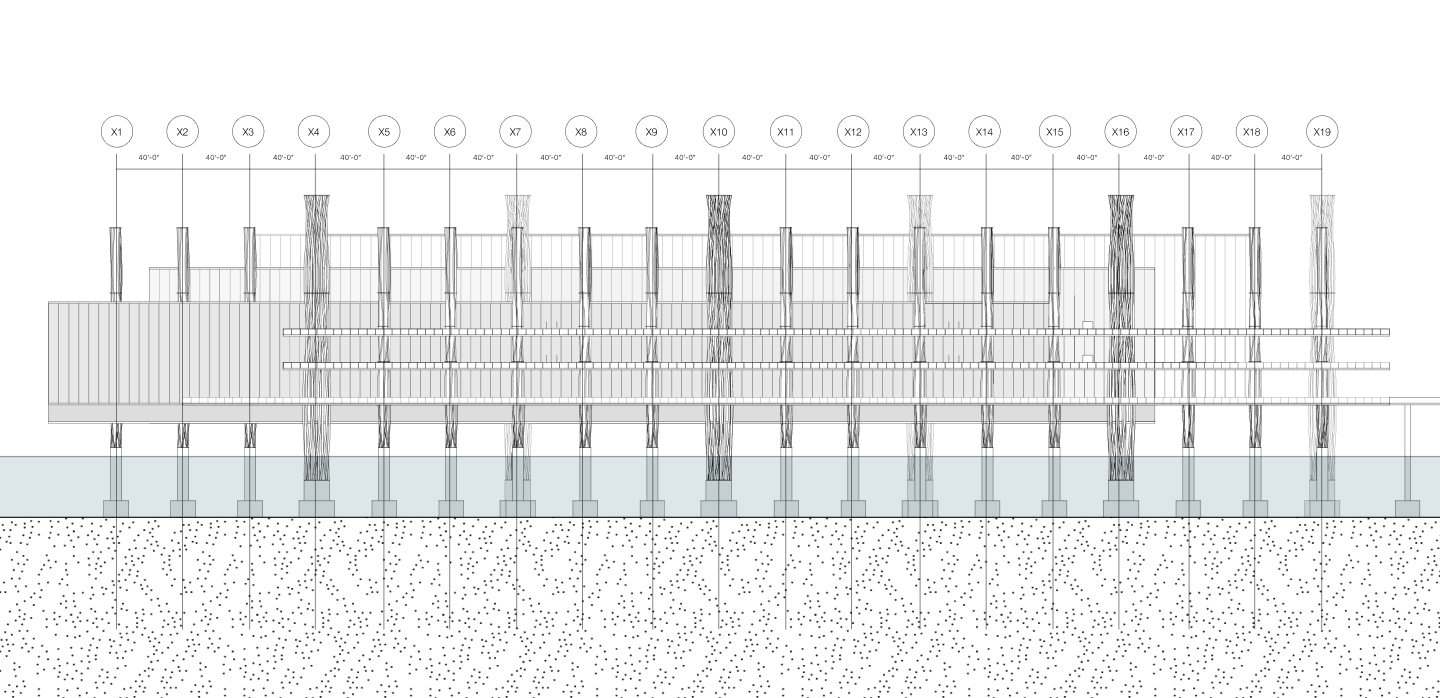
Waffle slabs are supported by hollow tubular columns, allowing maximum vertical circulation while blending into the background to reduce visual rigidity.
Immaterial elements can convincingly simulate environments. By choreographing these within a confined space, it becomes possible to create a living project that is immersive, adaptive, and ever-changing.
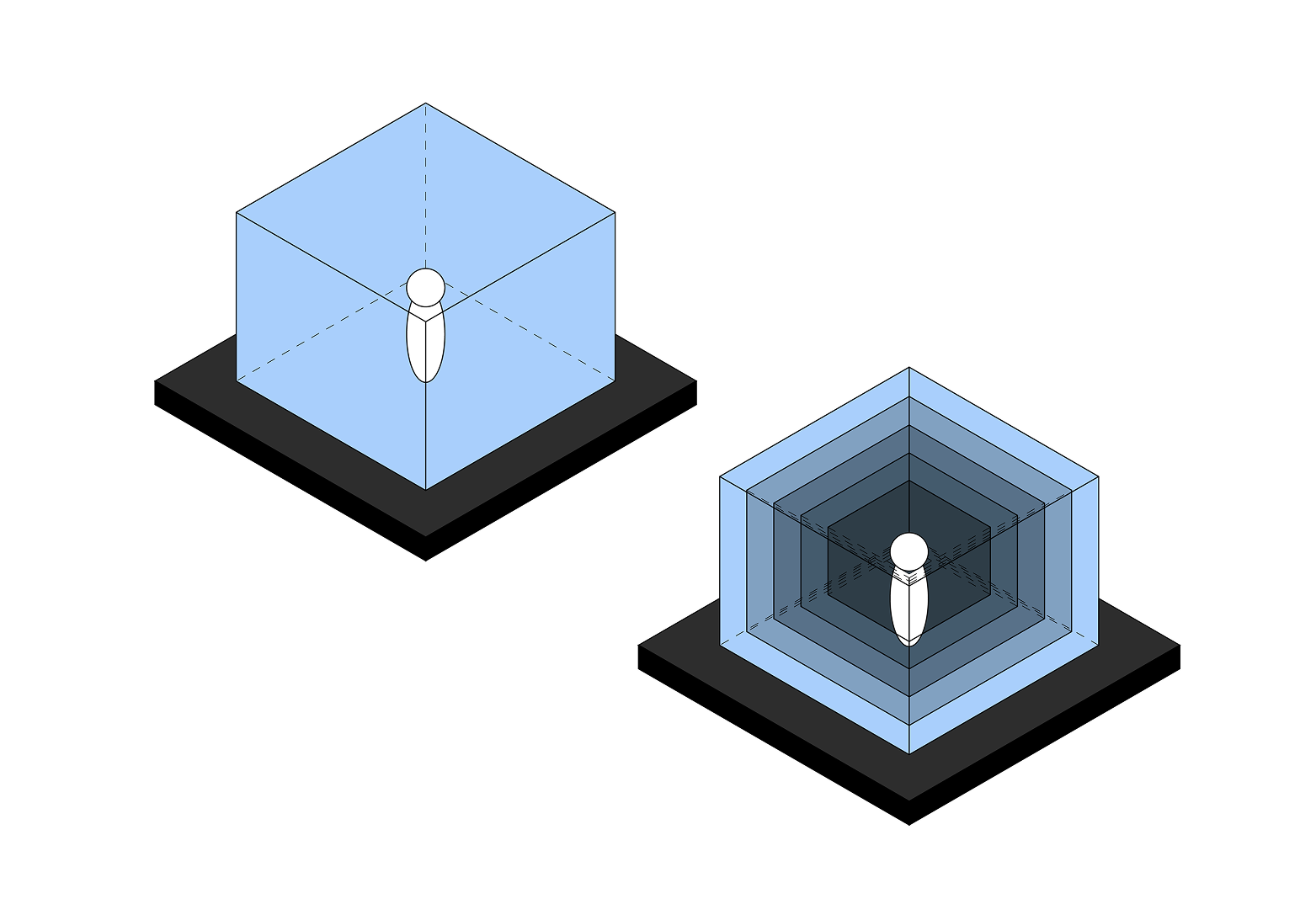
The absence of visual reference induces uncertainty, prompting an exaggerated yet plausible sense of latent danger. As humans rely heavily on vision to regulate movement and orientation, visual deprivation creates the perception of nearby obstacles.
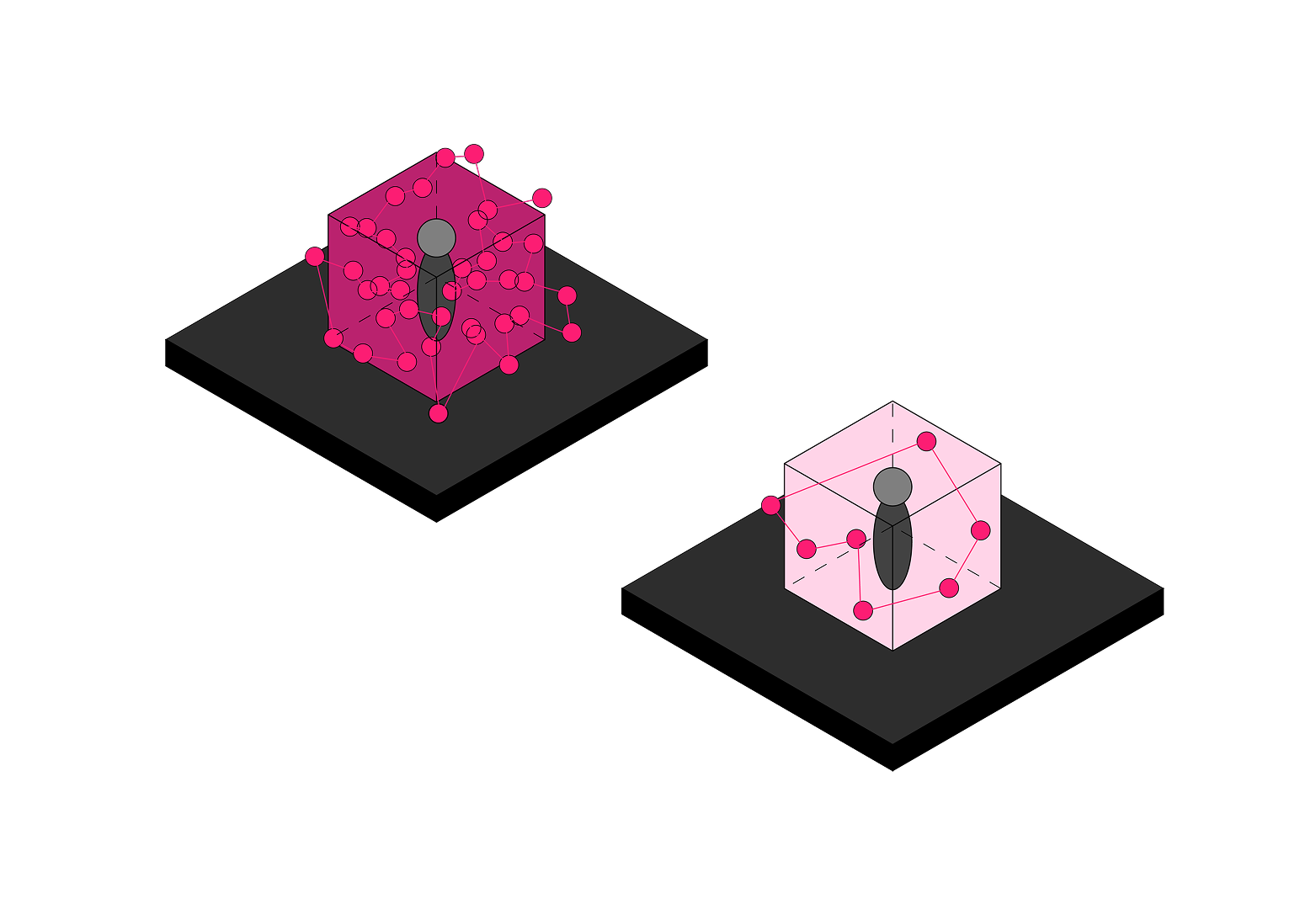
Temperature reflects the average kinetic energy of molecules in an environment. Human bodies respond similarly: muscle performance decreases in cold conditions, where tissues become more prone to injury, and increases in warmer environments.
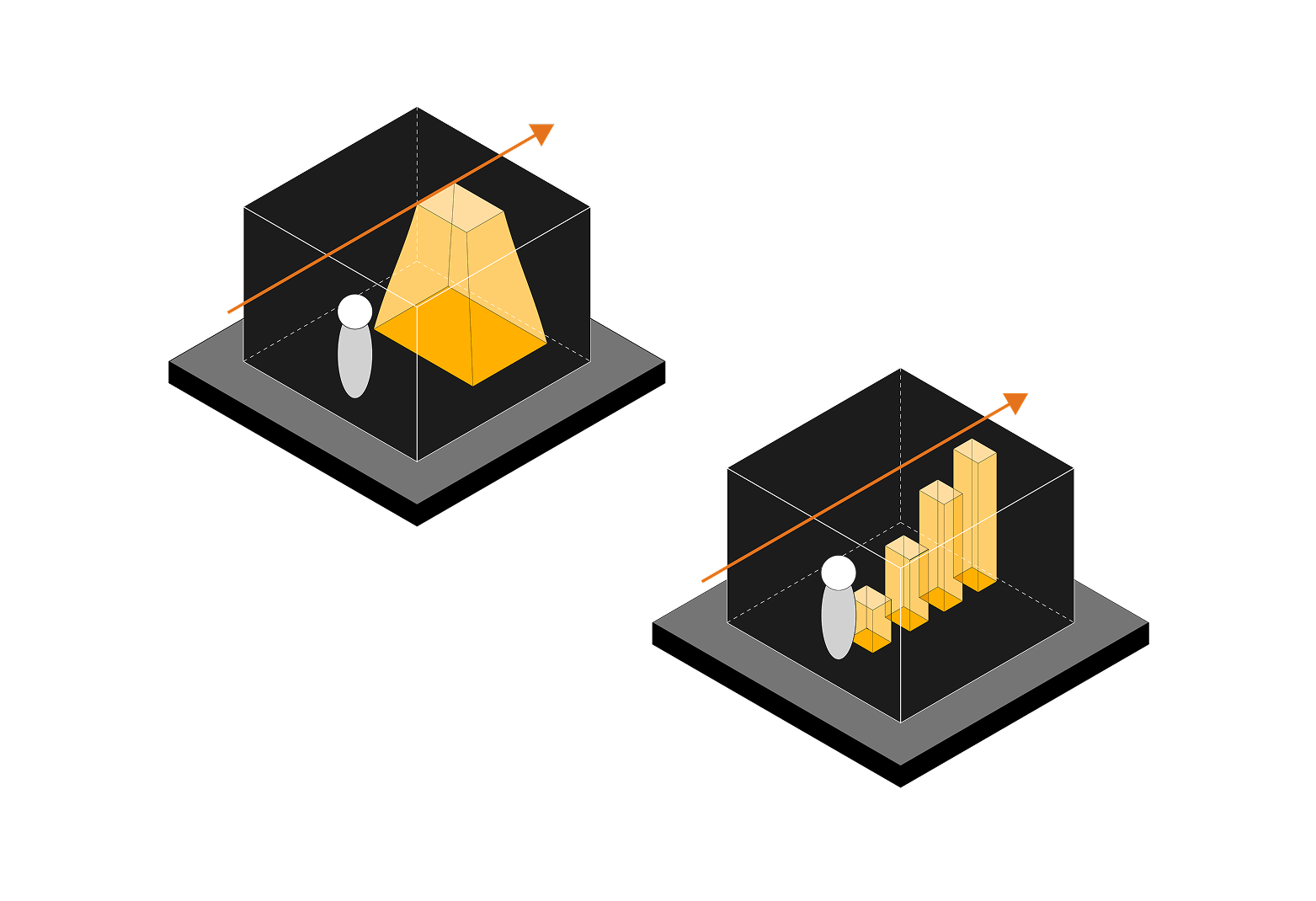
Light is an indispensable source of life, long emphasized in religious texts, art, and film. Humanity’s instinct to pursue light has driven the development of systems that mitigate safety hazards caused by limited environmental awareness.
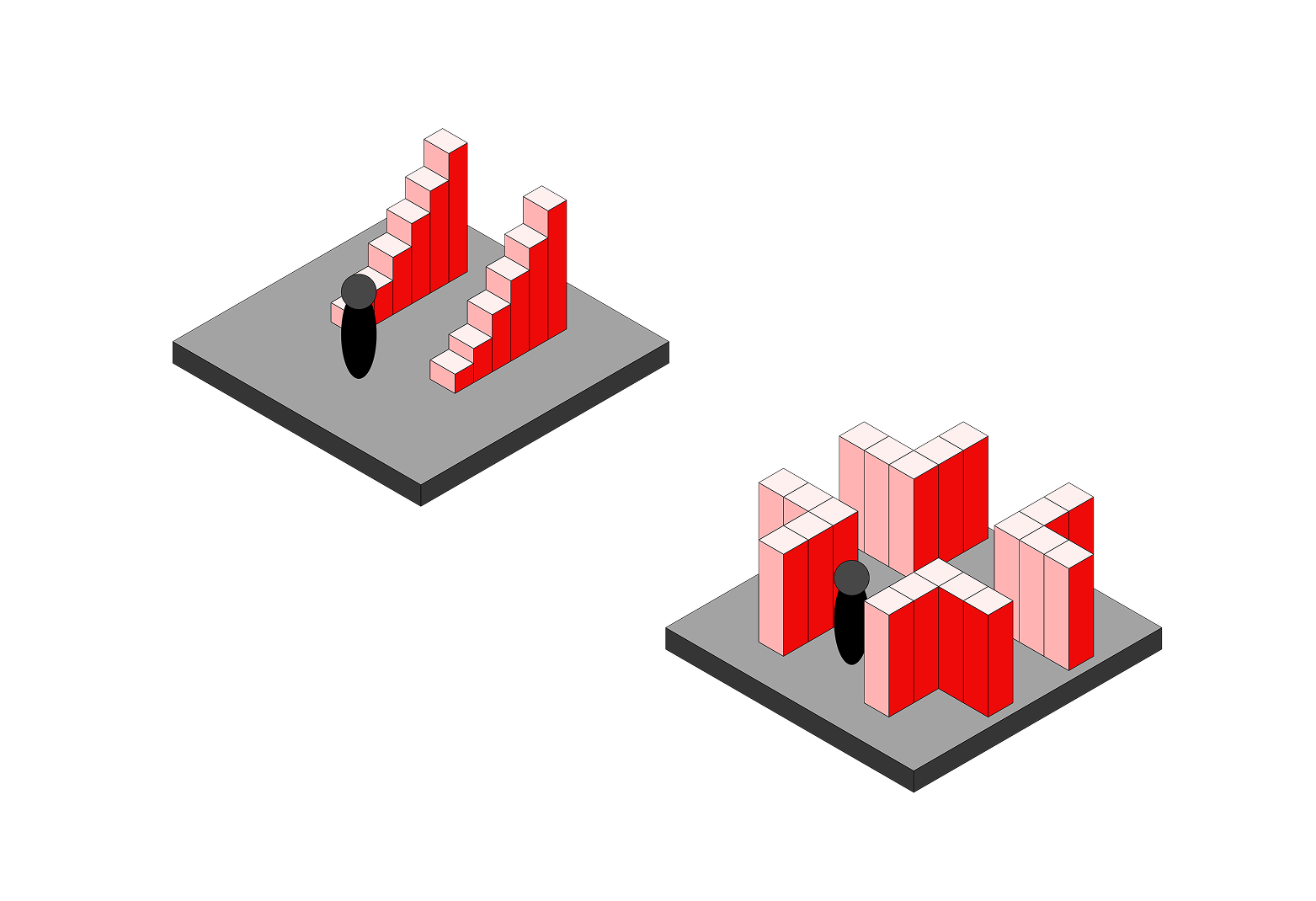
Thresholds and barriers can be formed through fundamental masses. Despite their clinical appearance, spatial arrangements still communicate entry, exit, and phase transition to users.
Biome Library: Pier 55-1 is situated adjacent to Pier 55, New York and is conceived a cargo-ship-like architecture.
Rather than transporting goods, the structure carries modular biome containers,
each housing a distinct environmental condition using immaterial elements.
The project reframes the pier as a point of arrival and exchange—where ecosystems are stored, displayed, and experienced amid urban context.
Although immaterial elements demand careful and precise maintenance, their inherent susceptibility enables
the creation of diverse and continuously changing environments. Because such elements require only minor
calibration of the systems that generate them, spatial conditions can be easily adjusted. The project leverages these qualities
to provide users with ever-renewed pseudo-environmental experiences.
Biome Library: Pier 55-1 is situated adjacent to Pier 55, New York and is conceived a cargo-ship-like architecture.
Rather than transporting goods, the structure carries modular biome containers,
each housing a distinct environmental condition using immaterial elements.
The project reframes the pier as a point of arrival and exchange—where ecosystems are stored, displayed, and experienced amid urban context.
Although immaterial elements demand careful and precise maintenance, their inherent susceptibility enables
the creation of diverse and continuously changing environments. Because such elements require only minor
calibration of the systems that generate them, spatial conditions can be easily adjusted. The project leverages these qualities
to provide users with ever-renewed pseudo-environmental experiences.
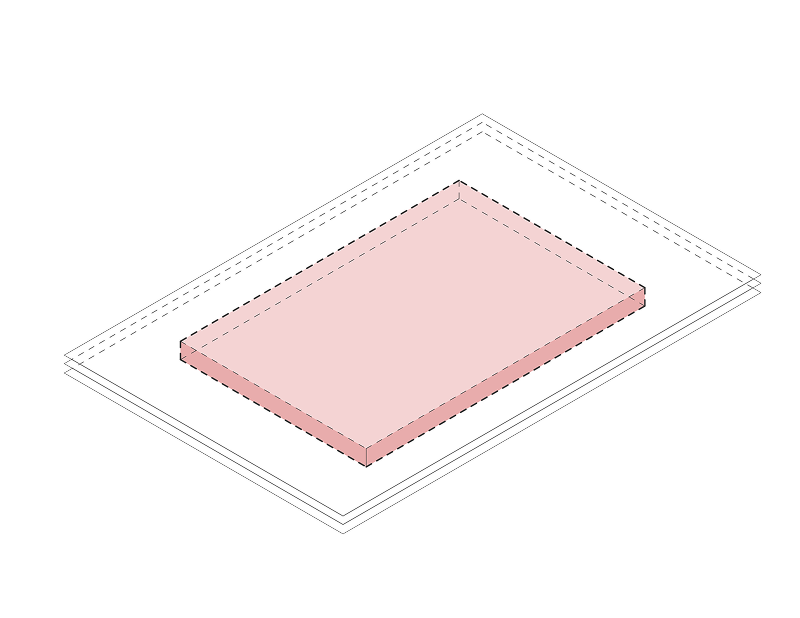
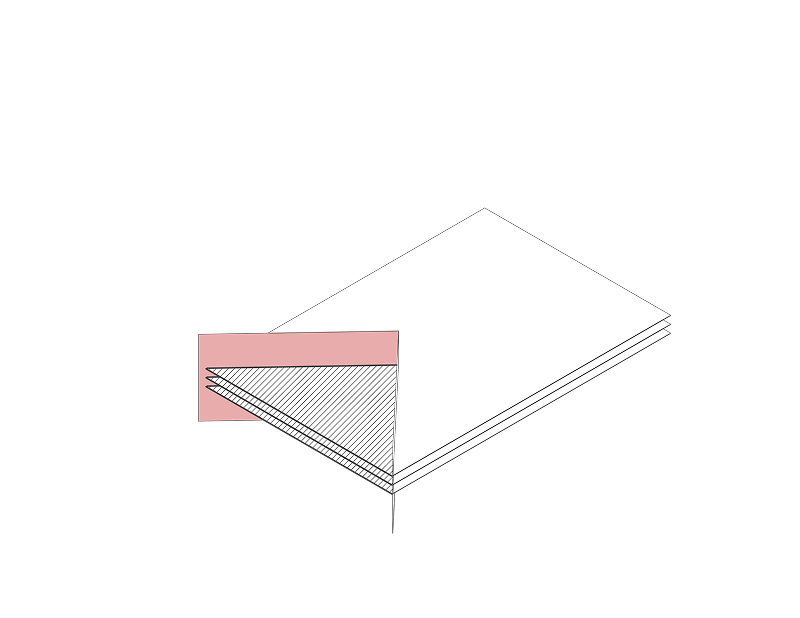
Similar to Toyo Ito’s Mediatheque, Biome Library: Pier 55-1 is comprised of waffle slabs supported by 209 tube- like columns. This strategy is effective, as it allows for the efficient concealment and storage of utilities such as pipelines and electrical systems.
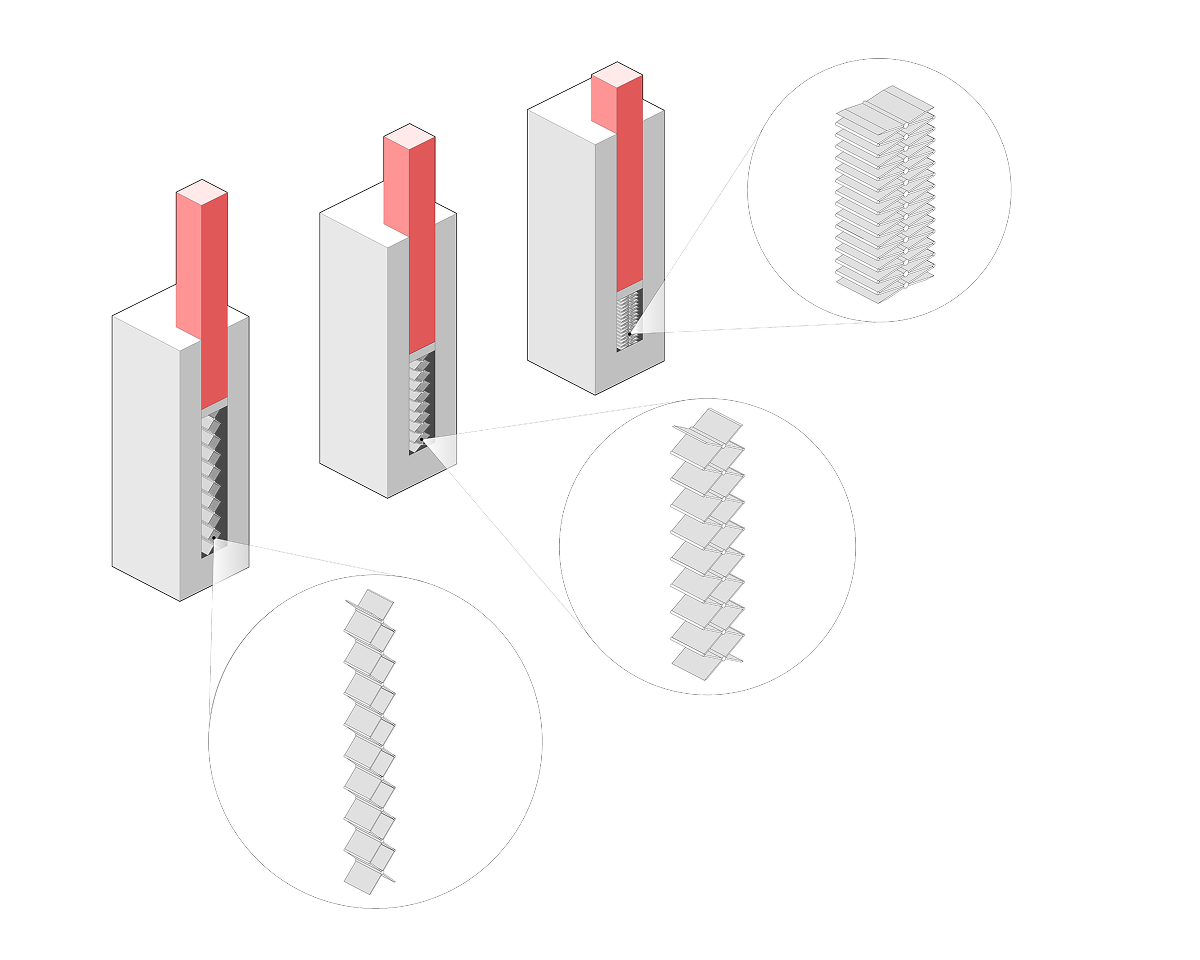
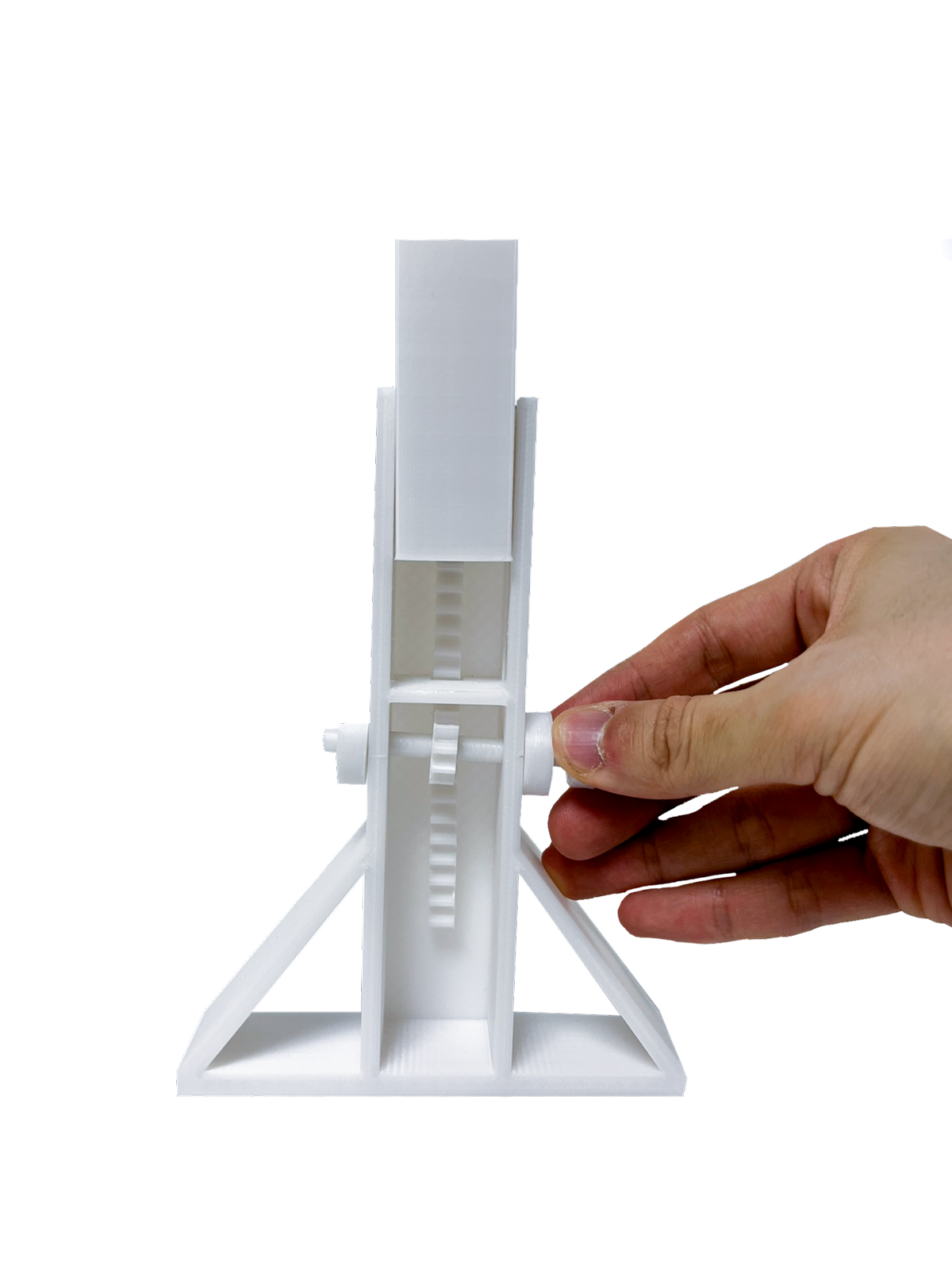
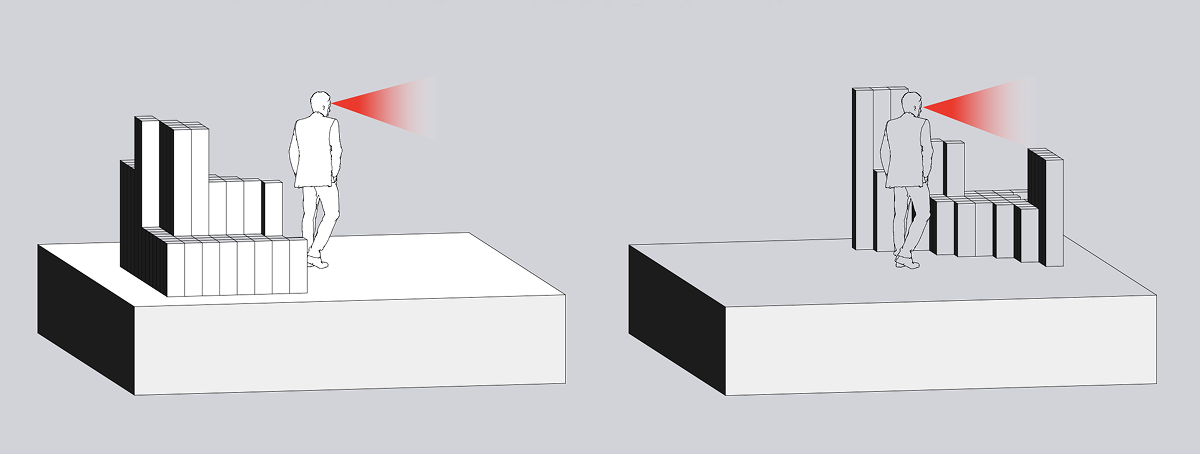
Hexadrones regulate visibility and circulation by forming adjustable backgrounds that mimic natural obstructions found in biomes. While the project minimizes materiality, complete emptiness would diminish realism. Because biomes are dynamic and ever-changing, visual and volumetric elements are necessary to convey a living environment.
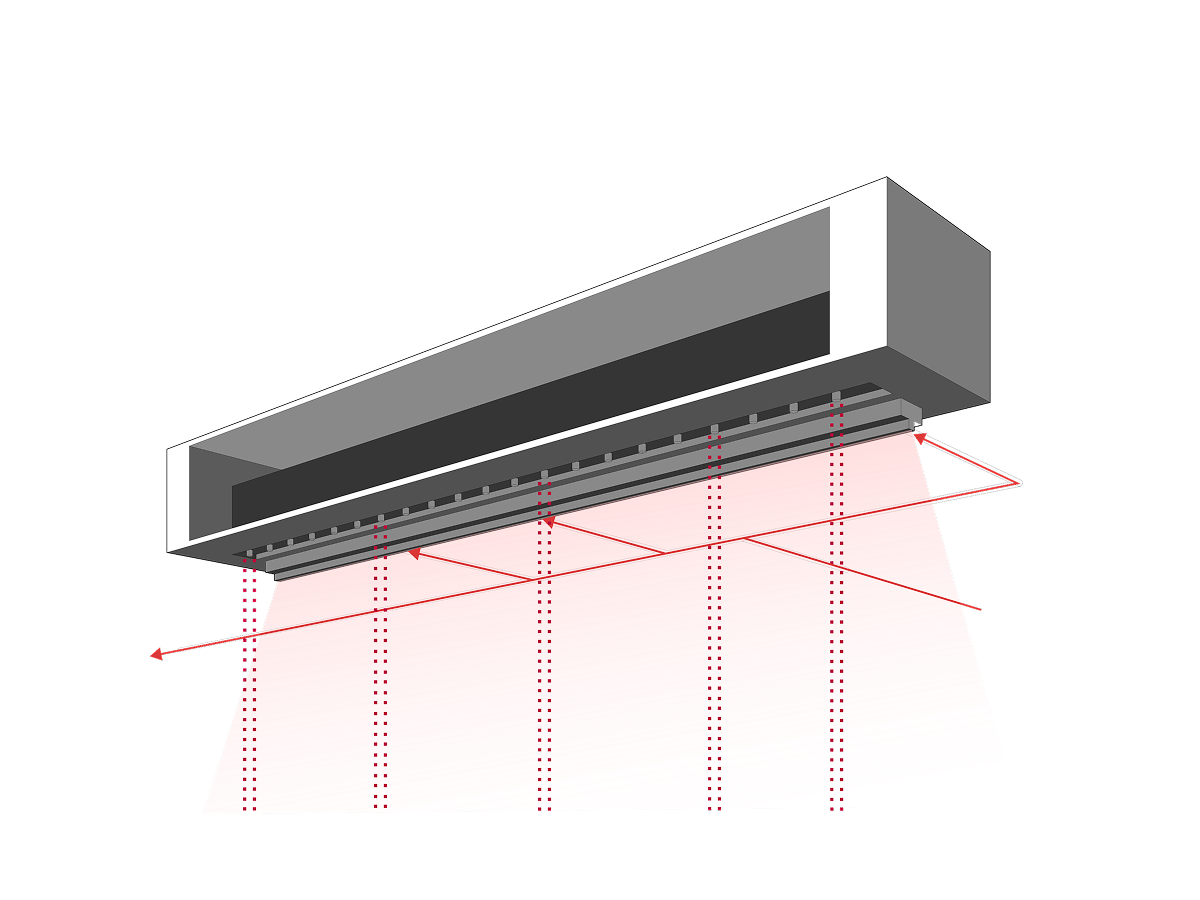
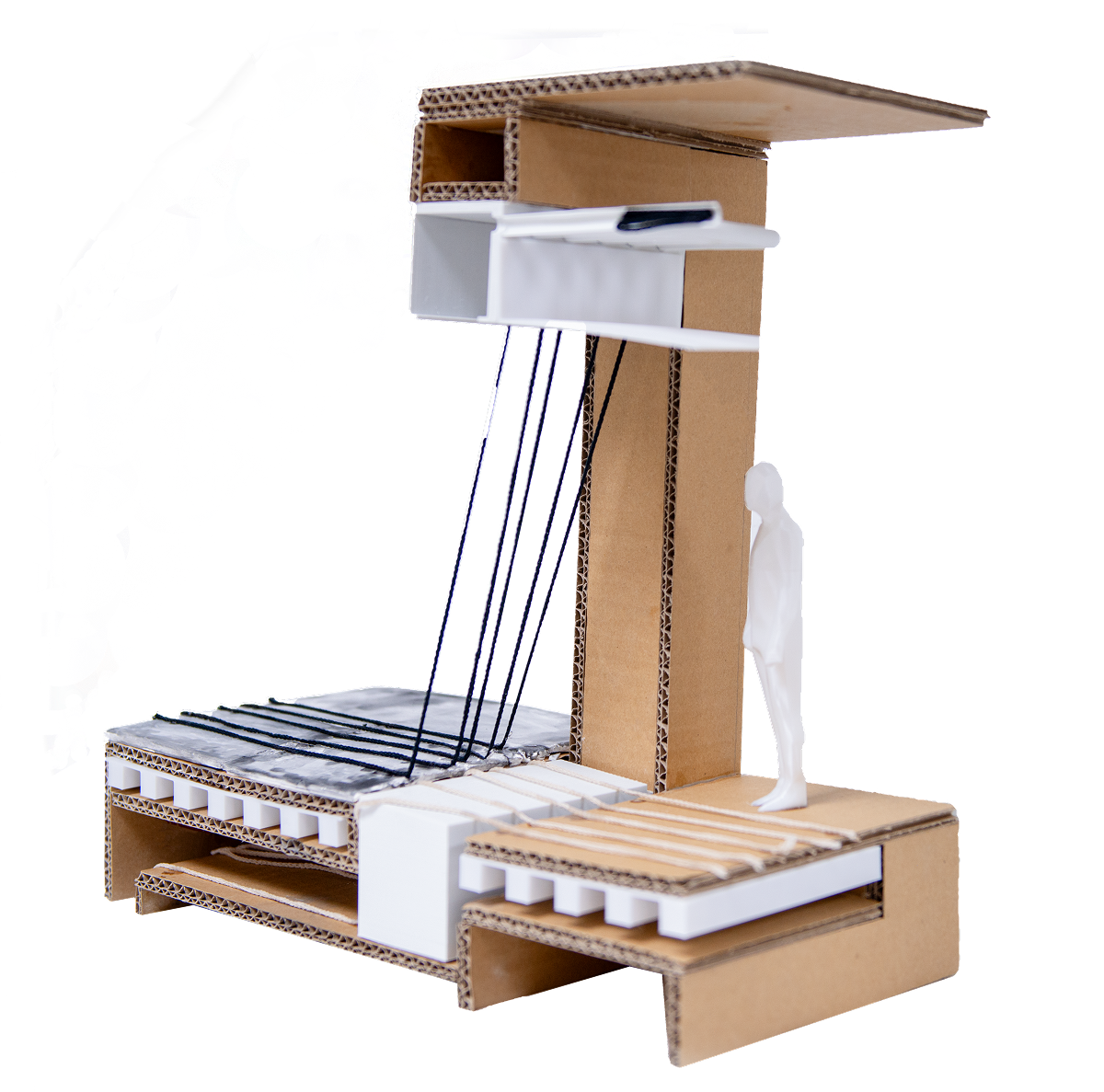
Tropical rainforests are humid due to their geographical location and thick layers of vegetation. The use of fog machine and artificial waterfall produced enogh amount of moisture to replicate the forests’s feature and as visual impedience for the users.
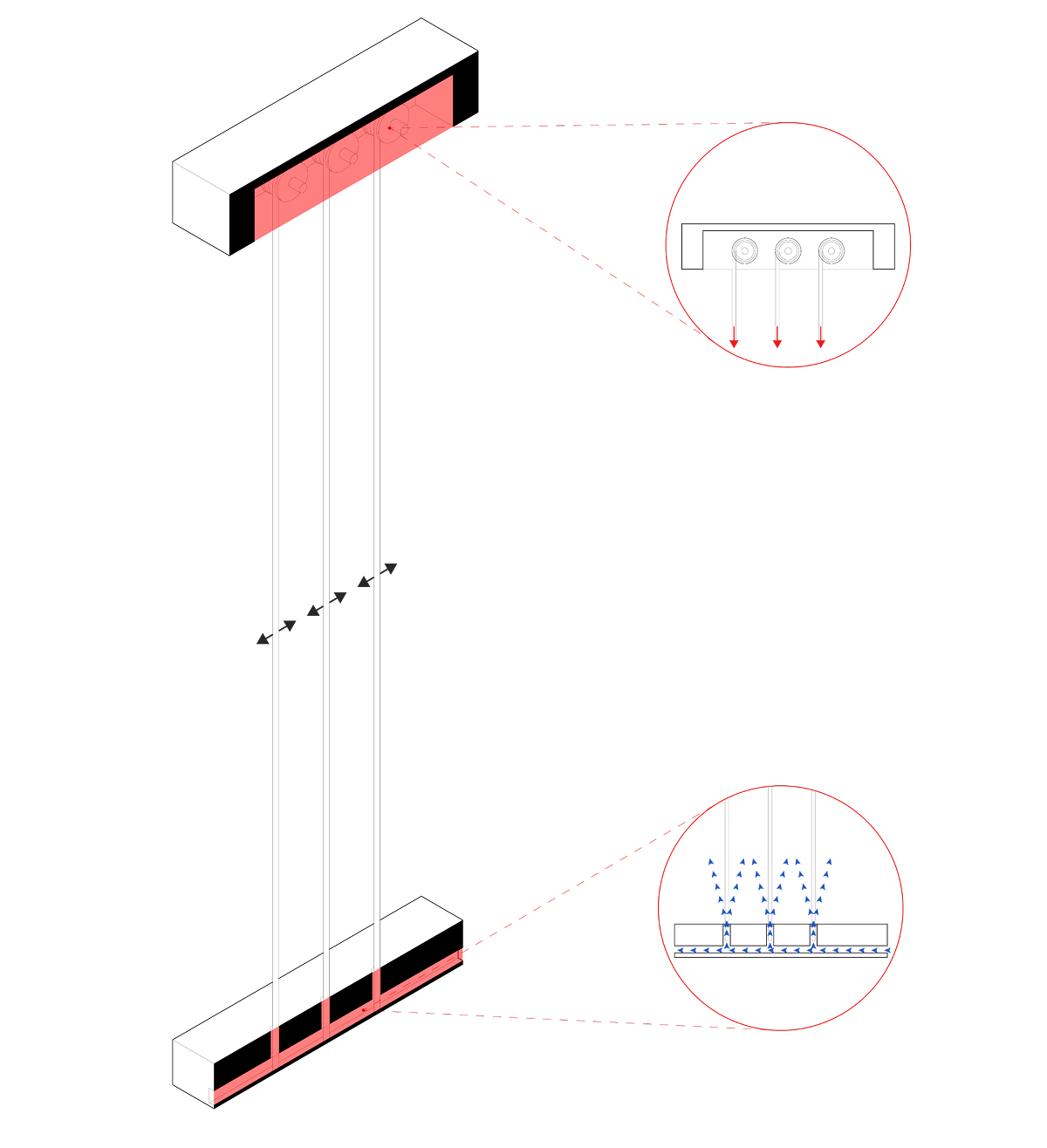
Tropical rainforests are humid due to their geographical location and thick layers of vegetation. The use of fog machine and artificial waterfall produced enogh amount of moisture to replicate the forests’s feature and as visual impedience for the users.
 Patrick